


 World Opinion | Alternative Média Débats De Société, Questions, Opinions et Tribunes.. La Voix Des Sans-Voix | Alternative Média
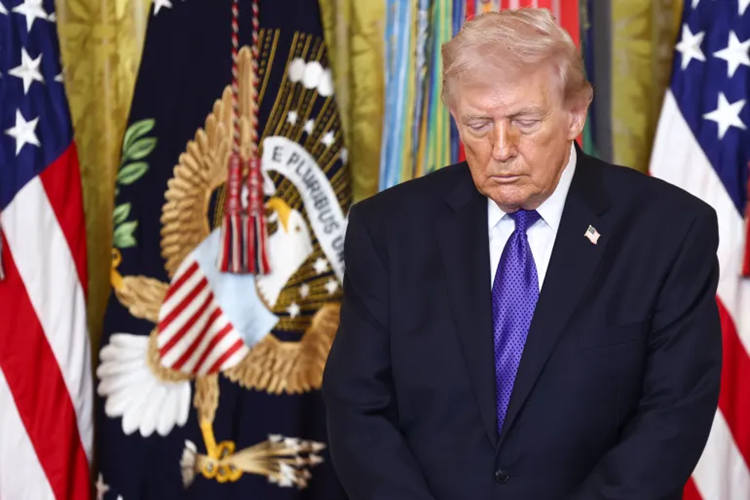
War powers legislation talks reignite as Democrats push back on Trump’s justification for ‘preemptive’ strikes on Iran.
As the US and Israeli militaries expand their strikes on Iran, the administration of US President Donald Trump has alternated its justification for the war between preventing immediate attacks and countering the long-term existential threat of a nuclear Tehran.
This was on full display on Monday, with Trump and Pentagon chief Pete Hegseth appearing to make the case that the culmination of Iran’s regional policies in the 47 years since the Islamic revolution, coupled with the future of its ballistic and nuclear programmes, represented an immediate threat to the US.
US Secretary of State Marco Rubio, meanwhile, argued that Washington’s close ally Israel was planning to attack Iran. In which event, the administration expected Iran to strike US assets, therefore justifying launching a preemptive attack, he said.
To date, the administration has offered little clear evidence to support any of its claims, according to advocates and analysts, as well as Democratic lawmakers who have recently attended classified briefings.
“The reality is, they’ve put forth very little evidence, and that’s a huge problem,” Emma Belcher, the president of Ploughshares, a group that advocates for denuclearisation, told Al Jazeera.
“It says, one: They don’t think they need to [make the case] for the war; that they won’t necessarily be held to account for it,” Belcher said. “But it also says to me that the evidence quite possibly isn’t there, and that they want to avoid particular scrutiny.”
Republicans have largely coalesced around the administration’s messaging, even as Democrats have pledged to force votes on war powers legislation to assert constitutional authority over the president’s military action.
Still, the administration remains in a tenuous political position as Trump’s Republican Party stares down midterm elections in November. Early public polling indicates little outright support from the US public, even as Trump’s Make America Great Again (MAGA) base has been staid in its response.
But the more days that pass, and the more US service members are killed, the more likely that Trump will be confronted with the contradictions to his past anti-interventionist promises.
“The longer it goes on and the more costly it is in terms of lives… the more the lack of evidence becomes an albatross around the neck of the administration – one that it will have to account for come November,” according to Benjamin Radd, a senior fellow at the UCLA Burkle Center’s international relations department.
A kaleidoscope of claims
Speaking from the White House on Monday, Trump praised the “obliteration of Iran’s nuclear programme” in US strikes last June. But moments later, he claimed that efforts to rebuild that programme, coupled with Iran’s ballistic missile programme, represented a menace to the US.
“An Iranian regime armed with long-range missiles and nuclear weapons would be an intolerable threat to the Middle East, but also to the American people,” Trump said. “Our country itself would be under threat, and it was very nearly under threat.”
Trump also said that, if not for US and Israeli attacks, Iran “would soon have had missiles capable of reaching our beautiful America”.
Daryl Kimball, the executive director of the Washington, DC-based Arms Control Association (ACA) said any claims of immediate or middle-term threats posed by Iran in terms of their ballistic and nuclear power are not supported by available evidence.
That is significant, as such “imminent threats” are required for a president justify attacks on foreign countries under both US domestic law and international law, save for approval from Congress.
World Opinions + Agencies