

 World Opinion | Alternative Média Débats De Société, Questions, Opinions et Tribunes.. La Voix Des Sans-Voix | Alternative Média
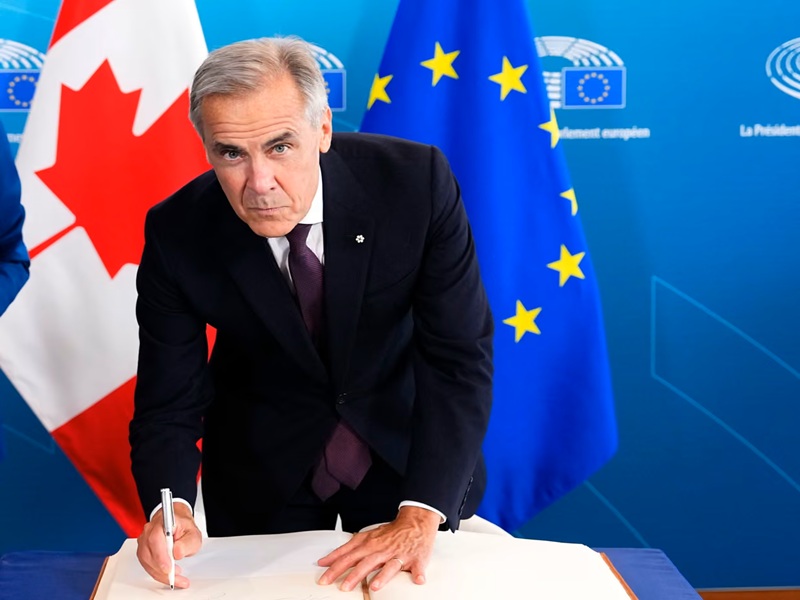
Ursula von der Leyen brought a new mascot to her annual State of the Union address to the European parliament: the Canadian prime minister, Mark Carney.
The leader of a plucky, like-minded liberal democracy, locked in an unsought trade war with its much bigger bully of a neighbour, Carney crossed the Atlantic and attended this flagship event of Europe’s political calendar to demonstrate his country’s shared values and desire to get closer to the EU. He was rewarded with a standing ovation and the first ever offer of an (invented) status of “associate member” of the EU.
The grand-sounding title is more a gesture of political support and reciprocal affection than any sort of binding engagement. The EU doesn’t have associate membership in its founding treaties. It does make association agreements with close countries, some of which eventually join the bloc. It also has partnership, trade and cooperation agreements with more distant friends – it had one with Russia, in happier times.
But using the “m” word in connection with Canada, which fails the geographical test for membership, may create an ambivalent precedent for the many Balkan and eastern European countries that are actually negotiating to join the bloc – and for the UK, which stormed out a decade ago but is now eager to get closer again.
Ukraine railed against any such “associate” status in May, when the German chancellor, Friedrich Merz, floated the idea as a stepping stone towards eventual full EU membership. Western Balkan states that have been waiting more than two decades for accession want nothing to do with such a halfway house.
For Canada, though, the honorific title conveys a sense of European solidarity in its struggle with Donald Trump’s US, and a degree of closeness on fundamental values that responds to Carney’s seminal call at Davos in January for an alliance of like-minded “middle powers” to uphold as much as possible of the rules-based international order.
Carney’s presence in Strasbourg, and his applause for EU free trade, tech regulation and defence initiatives, made the EU look more desirable globally than it sometimes appears to angry European electorates tempted to vote for Eurosceptic populists in national elections next year. Von der Leyen must be hoping that a little of the Canadian prime minister’s stardust will rub off on the embattled European integration project, which faces headwinds not only from predatory great powers and hostile big tech but also from recalcitrant governments loth to share power and pool sovereignty in sensitive fields such as defence.
Closer cooperation with Canada and other like-minded powers such as India, Japan, Australia and New Zealand can amplify the EU’s global influence and help build alliances in defence of democracy, open rules-based trade and security of supply for critical raw materials. However, it cannot mitigate the urgent threats that Europe faces from increasingly reckless Russian aggression, nor be a substitute for a vengeful US that under Trump seems hell-bent on disengagement from European security.
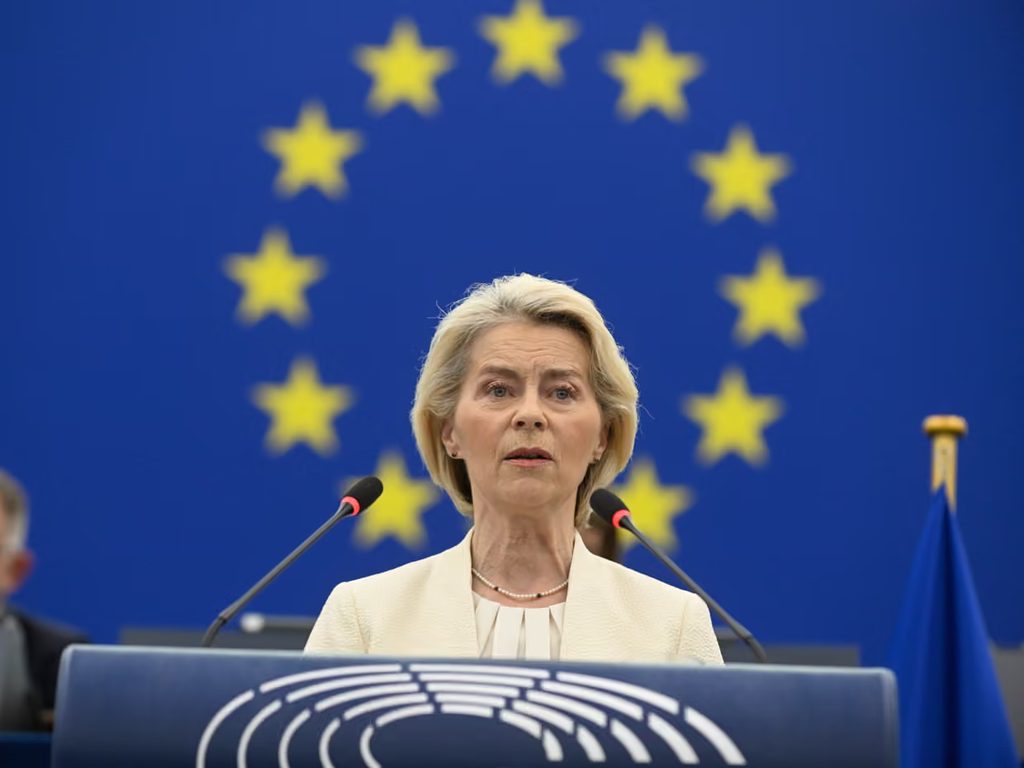
Von der Leyen offered three initiatives to address these challenges. She proposed a new EU mechanism, aligned with Nato’s article 4 security consultations, to enable countries to trigger urgent EU consultations if they fall victim to so-called hybrid warfare – cyber-attacks, drone incursions, undersea cable cutting, railway sabotage, energy grid disruption and disinformation campaigns. It was time for a “counter-hybrid playbook”, she said, in which the EU moved beyond just boosting resilience and took a more robust approach to responding to covert warfare.
Whether all member states have the stomach to risk escalation by hitting back at Russia, even if such hybrid attacks start causing casualties, remains to be seen. EU and Nato members that have offensive cyberwarfare capabilities could and should be striking back now to set red lines for Moscow, for instance by putting Russian energy grids or airports out of action as a warning. But these are national measures unlikely to be aired or jointly approved in Nato or EU councils.
European countries have gone beyond sanctions to put Russia’s shadow fleet of rust-bucket oil tankers out of action – impounding them on safety or insurance grounds, as France and the UK have done episodically, and denying them passage through sensitive straits. But each action must be thought through, to achieve a deterrent effect rather than inviting ever bolder defiance by Vladimir Putin that could spiral into a wider war.
Von der Leyen’s other initiative, to be detailed in an updated European security strategy due next month, was to call for a European security council – including Ukraine, the UK and Canada alongside EU powers – to steer the continent’s expanding defence effort. Such a coalition of the willing, as I have advocated, could indeed provide top-level leadership and a crisis-management forum. The challenge will be to give it real levers of power, and avoid it becoming a talking shop.
Von der Leyen’s Canadian caper is welcome because it shows we have friends willing to link their destiny to ours in troubled times. But it is not in itself a solution to the continent’s urgent security problems.
By Paul Taylor is a senior visiting fellow at the European Policy Centre – Theguardian.com